


What Is a Die Cut Box, and When Do You Need One?
Your packing team loads a new product into the standard conventional carton. There’s too much movement, the flaps obstruct the contents, and the case erector rejects several blanks during the first production run.
The carton fits on paper, but it doesn’t work in practice. That’s when you may need one, and the Manor Packaging team can help.
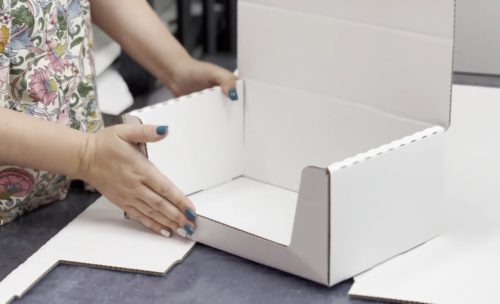
A die cut box is a corrugated box or packaging items which have been precision cut using a laser manufactured cutting tool. Unlike a regular slotted carton, it can include locking tabs, shaped openings, integral dividers, tear strips and other unique structural features designed around your product and packing process.
At Manor Packaging, we develop bespoke die cut packaging for medium-to-large operations across the UK. An unusual shape is only one part of the specification. It has to protect the product, run consistently through your operation and control the total packaging cost.
What Makes Die Cut Packaging Different?
A regular slotted carton is a practical choice when you need a straightforward transit case. Its main flaps meet at the centre, and the format can accommodate a broad range of products without the need for complex tooling.
However, Die Cut Packaging solutions give you more control over the structure, ease of assembly and material use. The knives in the cutting tool create the profile, while crease rules form accurate fold or perforation lines within the blank. This allows the packaging to wrap around a product, hold components in place or create a particular opening and closing sequence that makes assembly faster and easier.
When a Purpose-Made Die Cut Format Helps
Think of a standard carton as a general production fixture. It’ll handle a range of jobs, but a purpose-made fixture gives you better positioning and repeatability when the product or process demands it.
Die cutting is often the better route when you need:
- A bespoke fit around an irregular product
- Product-specific internal supports, dividers or corrugated fitments
- Fast manual assembly or compatibility with automated equipment
- A crash-lock glued base or another quick-erect format
- Controlled shelf presentation for national retailers and brand owners
- Consistent placement of printed areas, openings or tear strips
- Less or no reliance on tape or plastic-based void fill
- A higher-quality box structure
Die cut boxes can improve many packaging operations, but they aren’t automatically the right choice for every product. If a conventional format already fits well and your packing process is efficient, a standard box range may still offer the lowest unit price. When you compare the total packaging cost, including assembly time, material use, damage and throughput, a die cut format can be the more economical option.
How Should You Choose the Board Grade?
Board grade shouldn’t be selected from product weight alone. You’ll also need to consider stacking, handling, moisture exposure, shipping conditions, pallet layout, how tightly the contents support the outer packaging, and the desired aesthetic print quality and finish.
E-Flute, I-Flute and B-Flute are single wall grades used for lighter products, retail-facing boxes and e-commerce packaging. EB-Flute or BC-Flute are double wall grades and are usually chosen for transit packaging that needs to stack reliably on a pallet.
It’s similar to setting the pressure on a production machine. A setting that works for one material can produce rejects when the product, speed or operating conditions change.
Why Do Manufacturing Tolerances Matter?
A drawing can be dimensionally correct and still produce packaging that causes operational problems. Slot depth, crease position, blank size, glue placement and print-to-cut alignment all need controlled manufacturing tolerances.
Automated case erectors are particularly unforgiving. A person may compensate for a slightly misplaced crease without thinking about it, but a machine can’t improvise. A small variation repeated across 50,000 units becomes a throughput problem rather than an isolated packaging defect.
The packaging specification works like a production schedule. If every input is controlled, the line keeps moving. If one measurement drifts, the disruption travels through the rest of the operation.
Keeping the Packing Line Consistent
Your supplier should ask about:
- Whether the packaging will be erected manually or automatically
- Packing line speed and the location of guides, sensors and vacuum pick-up points
- Product tolerances and acceptable internal movement allowances
- Glue areas and required closing method
- Print registration and corporate branding guideline control
- Pallet configuration, stacking conditions and shipping route
- Target order volume and likely demand peaks
Flatbed and rotary die cutting are both established manufacturing routes, but you shouldn’t choose between them from a product name alone. Blank size, board caliper, structural complexity, run length and finishing requirements all affect the decision.
For quick assembly formats, it’s also worth understanding how crash-lock and standard cardboard packaging compare. A correctly specified FEFCO 0713 Crash Lock Glued Box can reduce erection time, but it’ll only deliver that benefit when its board, creases and glued joints remain consistent.
Which Compliance Requirements Affect the Specification?
Compliance isn’t a label added after the structural work is complete. It behaves more like a controlled bill of materials.
From April 2026, UK Extended Producer Responsibility fees began moving towards eco-modulation using the Recyclability Assessment Methodology, as outlined in the government’s EPR packaging fee guidance (gov.uk), so a small design feature may affect more than the appearance of the pack.
You’ll need accurate material data from across the packaging supply chain. Don’t assume that a corrugated pack remains straightforward to recycle after plastic windows, barrier coatings, labels or permanently attached components have been added. At Manor Packaging we can help your packaging comply with the latest packaging regulations and at the same time be fully recyclable.
Food and Drink Applications
Food and drink applications introduce another set of questions. The intended contact conditions, contamination risks, inks, adhesives, storage environment and traceability requirements all need reviewing.
What Should You Provide for a Useful Specification?
Start with the total cost of the packaging operation, including slow assembly, packing line downtime, excessive material and product returns.
That wider assessment is like checking a component against the full assembly before approval. It shows whether the packaging will perform once production starts.
Information Your Supplier Needs
For a useful packaging consultation, provide your product dimensions and weight, annual volume, order quantities, current packaging, packing method, line speed, pallet layout and shipping conditions. Include any retail, print, food-contact or EPR requirements from the outset.
Our design team can then assess the board grade, construction, manufacturing route and closing method as one specification. If you’re reviewing an existing pack, contact us with details of where it’s failing, whether that’s damage, assembly time, inconsistent blanks or avoidable material.
Manor Packaging manufactures from its Peterborough base for UK-wide delivery, supporting operations across Cambridgeshire, Lincolnshire, Northamptonshire, the East Midlands and East Anglia. Large enough to cope, small enough to care, we focus on packaging that performs from your packing line through to final customer receipt.
Begin your journey towards smarter packaging solutions, creating tailored packaging that delivers your brand safely and responsibly.