


Getting Packaging Ready for Peak Season: A Practical Guide
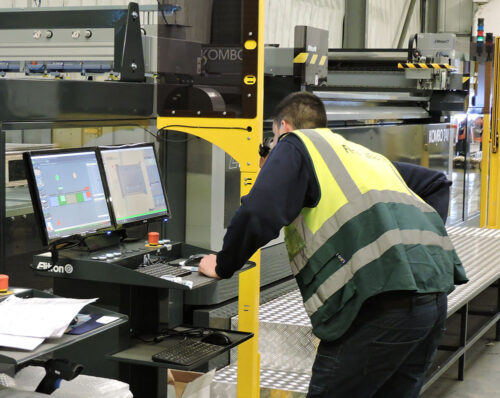
Your forecast changes on a Monday morning. One product line is up by 40%, a retailer has brought its promotion forward, and your 3PL needs packaging two weeks earlier than planned. By Wednesday, procurement is checking stock, warehouse teams are counting valuable warehouse pallet spaces, and operations wants to know whether the packing line can keep pace.
Peak-season packaging planning has to answer three questions. Will the specification protect the product, will it meet your compliance requirements, and can your supplier keep delivering when order volumes rise?
We’ve seen how a packaging specification that works during an average month can fail when storage periods lengthen, packing speeds increase and delivery schedules tighten. Ordering more of the same won’t be enough.
Begin With the Peak-Season Operating Plan
Packaging is a line-side component. If it isn’t available in the right quantity and specification, the rest of your operation can’t compensate for it.
Start with your expected order profile rather than last year’s packaging purchase total. You’ll need to understand which product lines are likely to grow, when that demand will arrive and whether the mix of products will change.
Review:
- Forecast volumes by week and stock keeping unit
- Promotion dates and retailer delivery windows
- Expected daily packing volumes
- Available storage at your site
- Packing line and case erector capacity
- Fulfilment and 3PL centre requirements
- Product returns and seasonal return periods
- Planned shutdowns, maintenance and reduced-shift dates
- Packaging call-off and delivery arrangements
Test the Forecast Against the Product Mix
Don’t assume that a 25% increase in sales requires exactly 25% more packaging. A change in product mix, bundle size or promotional configuration can shift demand towards a different format. You might have enough packaging overall while still running short of the one specification that keeps your fastest line moving.
Treat the forecast like a production schedule. A total for the quarter tells you how much material might be needed, but it won’t tell you which line is at risk on the busiest Thursday in November.
Check Your EPR Position Before Freezing the Specification
Extended Producer Responsibility for packaging, usually shortened to EPR, affects how qualifying UK organisations collect and report packaging data. It should be considered before you approve materials, dimensions and internal protection, not after your seasonal packaging has entered production.
Whether a business is classified as a large or small producer depends on its annual turnover, how much packaging it handles and other eligibility criteria set out in the current guidance.
Your precise responsibilities depend on what packaging you supply or import and how your organisation operates. Check the current GOV.UK guidance to establish which reporting responsibilities apply to your organisation. Don’t wait until year-end to establish which packaging data is available.
Build Reporting Data Into Procurement
Ask suppliers to provide clear material and weight information for each packaging component. Your internal records should connect that data to the relevant product, packaging format and quantity purchased.
It’s much easier to maintain a usable reporting trail as orders are placed than to reconstruct it from invoices after peak season. The process is similar to batch traceability on a factory floor. If the information isn’t attached to the job at the start, someone has to spend time finding it later.
EPR also gives you a practical reason to remove unnecessary material. That doesn’t mean weakening the specification. It means using design work to achieve protection with an appropriate amount of corrugated board, adhesives, tape and plastic-based void fill.
Specify Packaging for the Actual Product Journey
A packaging specification shouldn’t stop at product dimensions. It needs to account for how the product is packed, stacked, stored, shipped, opened and, where relevant, returned.
Equally as important, if in existence – the customer’s own packaging guidelines. Often a retailer or wholesaler will have their own bespoke packaging guidelines which should be followed.
Map the complete journey through to final customer receipt. A national retailer and brand owner might need retail-facing consistency and point-of-sale readiness. An e-commerce operation may need impact protection, fast packing and straightforward returns. A manufacturer may prioritise repeatability on high speed case-making machinery.
The right board grade is the one that works under your operating conditions.
E-Flute, I-Flute and B-Flute are single wall board grades with one fluting. They can provide a suitable balance of presentation, protection and material efficiency for lighter products, retail-facing packaging and many e-commerce applications.
EB or BC-Flute are double wall board grades with two flutings. They’re used where the packaging needs greater stacking strength, puncture resistance or protection through a more demanding handling route. The appropriate choice still depends on product weight, dimensions, storage and stacking conditions.
Account for Moisture and Storage Time
Corrugated board absorbs moisture from the surrounding atmosphere. As humidity rises, the board can lose compression strength, while moisture may also affect adhesive performance. This matters when packaging will remain in a humid warehouse, pass through chilled areas or spend longer in storage before dispatch.
Think of the specification as a set of machine settings. The board grade, flute, dimensions and internal fitments have to work together. Turning up one setting won’t correct a weakness elsewhere.
Ask what happens if seasonal stock is held for longer than usual. This is one area where the recommendation can change between sites, even when the product and packaging dimensions are identical.
Test Fit, Tolerances and Packing Speed
Peak season isn’t the time to discover that a case erector dislikes your new packaging format.
Nominal dimensions aren’t enough for an automated operation. Small variations in crease position, slot depth or board calliper can affect how packaging feeds, folds and seals at speed. Your supplier should understand the exact machinery model, packing method and manufacturing tolerances that your line requires to provide consistent high quality standards and no stoppages within the case erector.
Start with samples, but don’t stop there. Run a representative production trial using the people, equipment, tape, adhesive and contents that will be used during peak season. If the packaging will be assembled manually, involve the team that’ll erect it for an entire shift.
Choose the Format Around the Process
A FEFCO 0201 standard slotted case remains appropriate for many transit applications. It’s familiar, efficient to manufacture and suitable for automated or manual packing when correctly specified.
For operations where assembly time is a major cost driver, a FEFCO 0713 Crash Lock Glued Box may be worth testing. Its crash-lock glued base can reduce the number of manual actions required during assembly, although suitability will depend on the product, line and required packing sequence.
A packaging design that saves two movements at every packing station behaves like removing a small queue from every cycle. You won’t notice much difference across ten units. Across 50,000 units, your labour requirement and throughput can change materially.
That’s why the unit price can’t be reviewed alone. The packaging price is one line on the invoice. Assembly time, packing line downtime, product damage, rework, returns and late delivery fees are the other lines.
We work on the total packaging cost.
Reduce Movement Without Adding Unnecessary Material
Many peak-season failures begin with empty space inside the packaging. The product moves during shipping, strikes the outer walls and arrives damaged or scuffed. The usual response is to add more plastic-based void fill, but that increases material use and packing time without always controlling the product properly.
Bespoke Die Cut Packaging solutions can hold products in a repeatable position using corrugated dividers, fittings or retention features. This can reduce movement, improve packing consistency and support a move away from avoidable plastic-based void fill.
It’s the packaging equivalent of a locating fixture on an assembly line. Instead of asking each operator to judge where the product should sit, the design places it in the correct position every time.
The same review should cover volume efficiency. Oversized packaging takes up more storage space, can reduce vehicle utilisation and may require additional filling material. Make the packaging smaller only where testing confirms that product protection and packing performance won’t suffer.
For retail-facing products, protection isn’t the only requirement. Shelf-ready presentation, print consistency, brand colour management and corporate branding guideline control may all matter at point of sale. Packaging that survives dispatch but reaches the shelf marked, crushed or inconsistent hasn’t completed its job.
Make Environmental Performance Operational
Sustainability claims are only useful to procurement teams when they’re connected to a clear specification and supporting data.
At Manor Packaging, our factory is powered by 40% rooftop solar energy. The finished corrugated packaging is 99.9% recyclable, and 80% of our material is from already recycled sources.
Those points can support supplier reviews and Scope 3 reporting, but they don’t remove the need to examine each design. A poorly sized recyclable pack can still waste material, slow the packing line and increase the total packaging cost.
Environmental performance works like a quality specification. It has to be built into material selection, manufacturing and reporting. It can’t be added as a label after the design has been approved.
Ask your supplier to explain what can be reduced, what needs to remain and how any change will affect compression, assembly and protection. If an existing design uses several loose components, there may be an opportunity to replace them with one bespoke custom packaging solution. There will also be applications where the present specification is already close to the right answer.
Stress-Test the Packaging Supply Chain
What happens if your seasonal order doubles at short notice?
Supplier capacity matters because your confirmed forecast is rarely the final number. Promotions perform differently from expectations, retail dates move and one successful product can absorb stock intended to last several weeks.
Manor Packaging maintains an ongoing target of 30% capacity headroom buffer throughout the calendar year. It’s there to help us manage demand spikes without placing existing production schedules under unnecessary pressure. We manufacture from Whittlesey, near Peterborough, with UK-wide delivery and a core service area covering Cambridgeshire, Norfolk, Suffolk, Lincolnshire, Northamptonshire, Bedfordshire and Hertfordshire.
Your planning conversation should cover more than lead time. Ask how your supplier allocates capacity, monitors finished stock, handles urgent changes and measures delivery performance. Our guide to why OTIF delivery matters in your packaging supply chain explains why a promised date isn’t enough if part of the order is missing.
A supplier without spare capacity is like a warehouse with every loading bay permanently occupied. The operation may look efficient during a normal week, but there’s nowhere for an urgent job to go.
Plan Call-Offs and Storage
Holding every unit at your own site can consume valuable warehouse pallet spaces needed for finished goods or components. Ordering too little, however, can leave your operation exposed when seasonal volumes rise.
Stock and serve can connect manufacturing plans to scheduled call-offs from secure warehouse facilities. No Fail stock and serve arrangements can free space in your warehouse and provide the comfort that you will not suffer from stock outs or operational stoppages.
Agree the stock profile before demand peaks. Confirm which formats are critical, the replenishment trigger, call-off contacts, delivery locations and any site booking requirements. Don’t leave those decisions inside an email chain that only one person can access.
Give Your Supplier a Usable Peak-Season Brief
A useful quotation needs more than dimensions and an annual quantity. If your supplier doesn’t know how the packaging is used, they can only price the information they’ve been given.
Ideally provide:
- Product dimensions and weight
- Current packaging drawings or FEFCO codes
- Normal and peak weekly volumes
- Annual order quantity
- Required delivery and call-off pattern
- Storage conditions and likely storage duration
- Packing line make and model
- Manual assembly steps and target packing speed
- Stacking and shipping conditions
- Internal protection requirements
- Print and brand colour requirements
- Product return requirements
- EPR data and material reporting needs
- Current operational problems, damage or delays
If this list is not available, or unknown, simply call one of our packaging experts to arrange a free packaging consultation. We can take the stress and strain away to create packaging that works smart for your business.
Turn the Brief Into a Testable Specification
With that information, our design team can work from your current specification to the decisions still open. We can review material, fit, tolerances, assembly, protection and supplier logistics, then produce samples or costed options for your team to test.
It works like a complete shift brief. If we know the output target, machine constraints and quality checks, we can design around the real operation rather than guessing from a finished product.
If you’re preparing packaging for a medium-to-large seasonal run, you can contact us with your present specification, forecast volumes and packing process. Our consultative approach will focus on the decisions that affect compliance, product integrity, delivery reliability and total packaging cost.
Large enough to cope, small enough to care.
Begin your journey toward smarter packaging solutions, creating tailored packaging that delivers your brand safely and responsibly.