


Why Are Packaging Costs Rising in 2026, and What To Do About It
Buying corrugated boxes, corrugated trays and packaging in any volume and you probably already know that cost pressures are increasing. What’s harder to pin down is exactly why, and whether any of it is within your control.
The short answer: most of it isn’t. Paper and board prices, energy, wages, and new environmental taxes are all moving upward at the same time. But the part that is within your control – how your box is designed, how it runs through your packing line, and what you’re actually paying for when you pay “per unit” – is where the real savings sit.
At Manor Packaging, we manufacture corrugated packaging in Peterborough and deliver across the UK. We’ve had more conversations about price increases in the last three months than in the previous two years combined.
The ONS Producer Price Index for corrugated paper and containers now sits at 131.4. That’s over 30% above its 2015 baseline, and it’s not coming back down.
This guide breaks down the nine forces pushing your costs up in 2026, with real figures, and what you can actually do about each one.
What Is Driving Packaging Costs Up in 2026?
Nine structural cost drivers are hitting UK packaging buyers at the same time in 2026. Some show up on your quote as line items. Others are buried inside the unit price, where you’d never spot them unless someone broke it down for you.
This isn’t a single shock that the market will bounce back from. It’s several overlapping structural changes, each of which has raised the permanent floor of what it costs to manufacture a corrugated box. The nine drivers are:
- Corrugated Board and recovered paper fibre prices are still elevated from the 2021-2022 energy crisis
- UK industrial energy costs are running 60 to 70% above pre-Ukraine invasion levels
- Fuel surcharges on logistics, climbing from 5-7% to 10-20%+ in the last six weeks
- The April 2026 National Living Wage will rise to £12.71 per hour
- Demand-substitution into corrugated as brands move away from plastic packaging
- The pEPR scheme recovering £1.56 billion from producers in 2026/27
- Site closures from major integrated mills, reducing UK capacity
- Currency volatility is making imported inputs more expensive
- Surging e-commerce demand is tightening corrugated supply
Understanding which of these is driving your specific increase matters. A supplier renegotiating your box prices may be passing through several at once, and the only way to push back intelligently is to know what you’re pushing back against.
What Is Happening to Board and Raw Material Prices?
Prices for paper produced specifically for corrugated sheet rose by £80 to £85 per tonne from UK board mills in April 2026. To put that in context, the ONS Producer Price Index for corrugated paper and containers reached 131.4 in January 2025, with forecasters projecting a compound annual growth rate of 3.5% into 2026. Prices aren’t spiking and falling. They’re ratcheting up and staying there.
The recovered fibre market is part of the reason. Old Corrugated Container (OCC) – the recycled cardboard that feeds UK paper mills – has been fluctuating between £50 and £120 per tonne depending on grade. Export demand from Europe and the Far East pulls consistently against domestic supply. UK mills are bidding against international buyers for the same material, which keeps the floor on paper costs higher than they were before 2022.
Why Energy Costs Are Not Coming Down
If you want to understand why board prices stay elevated even when demand dips, energy is the answer. It accounts for roughly 30% of paper mill operating costs, and UK industrial energy prices are among the highest in the developed world. Business electricity is still running 70% above pre-Ukraine invasion levels. Gas is about 60% higher.
Think of it this way: the drying stage in corrugated sheet manufacturing is basically a giant gas bill. Natural gas has moved from a historical floor of around 70p per therm to a sustained plateau near 120p per therm. Every point that wholesale gas prices stay elevated directly raises the cost of the board before a single box is cut or printed.
The Middle East conflict is making this worse. Disruption to shipping routes through the Strait of Hormuz has kept crude oil and LNG prices elevated, adding pressure to both mill energy costs and domestic transport fuel. Fuel surcharges that started at 5 to 7% on logistics invoices have climbed to 10 to 20% or more in the last six weeks alone.
For a buyer receiving higher quotes in April 2026, the energy pass-through alone can account for 2 to 4% of the increase. The rest are arriving from the other eight drivers. Understanding the full picture is part of making smarter choices about your overall packaging and shipping costs.
How the National Living Wage Is Pushing Up Packaging Prices
From 6th April 2026, the National Living Wage rises 4.1% to £12.71 per hour for workers aged 21 and over. For 18-20 year olds, it jumps 8.5% to £10.85. That’s a floor, not a ceiling, and it applies to every corrugated manufacturer in the country.
This one is straightforward. The manufacturing of corrugated packaging is hands-on work: machine operation, material handling, converting, quality checking, and dispatch. At the new rates, a full-time worker at minimum wage costs an employer over £30,000 per year once you add employer National Insurance and auto-enrolment pension contributions. Businesses have to balance this starting point with their current wage structure, ensuring fairness and consistency across their workforce.
Stack that against frozen tax thresholds and rising employer NI, and total employment costs have risen by approximately 15% over a rolling 12-month period. That cost sits in every box you buy.
What This Means for Volume Buyers
If you’re a volume buyer with a large packaging budget, you’ll feel the NLW impact most clearly when contracts come up for renegotiation in Q2 and Q3 2026. Any packaging supplier who tells you their prices are unaffected by the NLW increase either isn’t manufacturing in the UK or isn’t being transparent about where the margin is coming from.
The practical response isn’t to argue the price increase. It’s to reduce the labour content in the box itself. At Manor Packaging, we take a consultative approach, working with customers to find box solutions that are quicker to erect and pack without compromising transit performance.
A box that takes 20 seconds less to fill on a packing line sounds small. Multiply that by tens of thousands of units over a year, and it’s a real number. The wage floor rises across the whole industry. That makes the efficiency of your box design more valuable, not less.
The Regulatory Burden: pEPR and Compliance Costs
The Extended Producer Responsibility scheme (pEPR) is adding direct, measurable cost to every packaging procurement decision in 2026, with PackUK recovering £1.56 billion from producers in 2026/27. Unlike the Plastic Packaging Tax, which only applies to plastic packaging with less than 30% recycled content, pEPR fees apply to corrugated buyers as well. Neither is optional for the businesses they affect.
How EPR Eco-Modulation Affects Your Budget
The Extended Producer Responsibility scheme (pEPR) shifts the full cost of managing household packaging waste from taxpayers to the businesses placing packaging on the market. The PackUK operational plan for 2026/27 confirms a recovery target of £1.56 billion from producers. Fees are eco-modulated based on recyclability ratings. Household product brands feel this first, because eco-modulation is assessed on the packaging that reaches the consumer, which is why cleaning products packaging tends to be reviewed for recyclability before anything else.
The key dates buyers need to know:
- April 2025: EPR scheme launched, producers now pay 100% of packaging waste costs
- October 2025: H1 2025 data submission deadline
- April 2026: H2 2025 data due, plus first Nation of Sale geographic reporting
- 2026 onwards: Red-rated packaging faces a 1.2x fee uplift, rising to 2x by 2028
Pure corrugated fibreboard performs well in the recyclability assessment, and manufacturers with ISO 14001 environmental management and FSC chain-of-custody certification can demonstrate compliance during audits. It’s one of the reasons corrugated beats plastic for UK packaging on both regulatory and economic grounds in 2026.
Market Consolidation and What It Means for Your Supply
The UK corrugated market has gone through the biggest structural shake-up in a decade, following global acquisitions within the UK market and multiple site closures, sadly including Wellingborough and Lowestoft. Other producers fell into administration during 2025. There are now fewer manufacturing sites than there were 18 months ago.
When large corporations close production sites, the remaining mills end up with stronger pricing leverage. That’s exactly what’s happened. Major corrugated players have historically pushed huge CCM price increases through in a single financial cycle when input costs and capacity constraints align in their favour.
For buyers with long-term contracts, the picture is more complex still. UK operations now sit inside a much larger entity with global priorities. A further rationalisation of EMEA operations would involve the same kind of site-by-site review that closed Wellingborough and Lowestoft, which sits in our delivery heartland.
Independent manufacturers like us aren’t immune to raw material costs going up. But we’re not carrying the overhead of a global corporate restructure. When you contact us about a requirement, you speak to people who make boxes. That’s a meaningful difference when your supply security is on the line.
How Currency Volatility Affects Your Packaging Costs
Sterling has been weak against both the dollar and the euro since 2016, and that weakness feeds directly into your packaging costs. Speciality papers, inks, adhesives, and converting machinery are all priced in foreign currencies. When the pound drops, your box costs more, even if nothing else changes.
This is one of the less visible cost drivers because it never appears as a line item. It sits inside the unit price, compounding alongside energy and fibre costs. Board mills and converters absorb what they can, but sustained currency weakness gets passed through in quarterly price reviews.
For packaging buyers, it means every raw material or component sourced internationally carries a built-in premium that moves with the exchange rate. It’s one more reason 2026 packaging costs feel sticky even when fibre prices stabilise briefly.
Why Subcontracting and Reselling Add Hidden Cost
Not every company that quotes on your packaging makes it themselves. A reseller buying from a converter who buys board from a mill means three margin layers between the paper and your business. When costs rise, every layer passes through the increase plus its own margin protection.
This one is entirely avoidable. Each additional link in the supply chain amplifies price increases rather than absorbing them.
Working directly with a manufacturer removes at least one of those layers and gives you visibility into exactly what’s driving the cost. At Manor Packaging, there’s no intermediary between our production floor and your delivery. When raw material costs move, we can show you the data and explain precisely what changed.
Rising Demand for Corrugated Is Tightening Supply
UK e-commerce packaging is forecast to grow from $1,095 million in 2023 to $2,817 million by 2030, a compound annual growth rate of 14.5%. Secondary packaging volumes are projected to increase by 45% by 2030, compared to 10.5% for packaging overall. More demand, less capacity. Prices follow.
The Plastic Packaging Tax is accelerating this. Brands switching from plastic shrink-wrap and polythene mailers to corrugated alternatives are adding millions of tonnes of new demand to a market that’s just lost capacity through the integrated site closures and the local sheetplant closures.
For buyers already committed to corrugated, this demand growth hits you through longer lead times and less flexibility on rush orders, even before the direct price impact lands. Suppliers who can still turn an order in 1 to 2.5 weeks are working with capacity headroom that most of the market no longer has.
How to Reduce Your Packaging Costs in 2026
The most effective way to reduce your packaging costs in 2026 is not to shop around for a lower unit price. That’s the instinct, but it’s the wrong one. The real savings come from working with a manufacturer who can look at your current specification, packing requirements and take cost out of the total box price.
Right-Sizing and Box Redesign
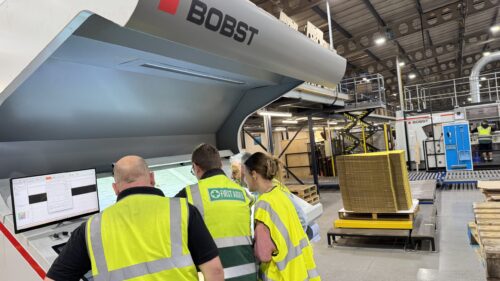
A box that’s too big for its contents costs more on every count: more board, more void-fill, higher dimensional weight charges from your carrier, and more storage space per unit. Our Bobst AI digital inspection table checks board integrity before it enters the production line, so we know the material is consistent before we convert it to your bespoke specification.
A redesigned crash-lock base that halves assembly time on an automated packing line can deliver net savings even if the new box costs a few pence more per unit.
Packing tens of thousands of units a year, 20 seconds saved per pack is real money. That’s the kind of total cost thinking that changes a budget conversation from “your price went up” to “our cost came down.”
Review Total Packaging Cost, Not Unit Price
The most common mistake buyers make is comparing unit prices in isolation. The complete cost of your packaging includes:
- The unit box price
- Labour time per box through the packing line
- Damage in transit rates and the cost of customer returns
- Reorder frequency and minimum order quantities
- Stock-holding and warehouse space per unit
- Lead time risk to your production schedule
At Manor Packaging, we discuss all of these before we quote a unit price. Our lead times run from 1 to 2.5 weeks, our On Time In Full (OTIF) delivery rate is 96 to 98.5%, and our production capacity of 18,000 boxes per hour gives us headroom to scale with customers as their volumes grow.
If you’re absorbing common packaging mistakes that are costing your operation money, a packaging review is usually where the real savings are found. Not a price negotiation with your existing supplier.
Packaging costs are rising in 2026 for structural reasons that aren’t going to reverse quickly. The practical response is to reduce cost from your specification, your packing process, and your supply risk. To discuss how Manor Packaging can help you minimise the impact through packaging redesign and re-engineering, contact our team.
Frequently Asked Questions
How Much Have Corrugated Box Prices Risen in 2026?
UK paper mills announced increases of £80 to £85 per tonne on Corrugated Case Material from April 2026. The ONS Producer Price Index for corrugated paper and containers now sits at 131.4, over 30% above its 2015 baseline, and forecasters project continued compound annual growth of around 3.5% into 2026. The increases are driven by sustained energy costs at UK mills, persistent demand for Old Corrugated Container recovered fibre, and tightening UK capacity following recent integrated mill closures.
Why Is Cardboard Going Up in Price in 2026?
Cardboard prices are rising due to persistently elevated energy costs at paper mills, from April 2026 announcements have been made to recover £80 to £85 per tonne on paper for the corrugated fibreboard production process. Corrugated Case Material, sustained demand for Old Corrugated Container recovered fibre, and fuel surcharges on logistics are climbing from 5-7% to over 20%. Middle East geopolitical tensions have accelerated energy and freight costs since early 2026.
What Is the Future of Packaging in 2026?
Corrugated packaging is increasingly replacing plastic secondary packaging, driven by pEPR eco-modulation and environmental responsibility. Supply is tighter following major industry consolidations and site closures, making lead time reliability and security of supply a more important procurement criteria than unit price alone. Buyers who redesign for total cost rather than unit cost will see the clearest savings.