

Hamper Packaging: How to Choose the Right Supplier, Meet Company Deadlines and Support Your Gifting Requirements
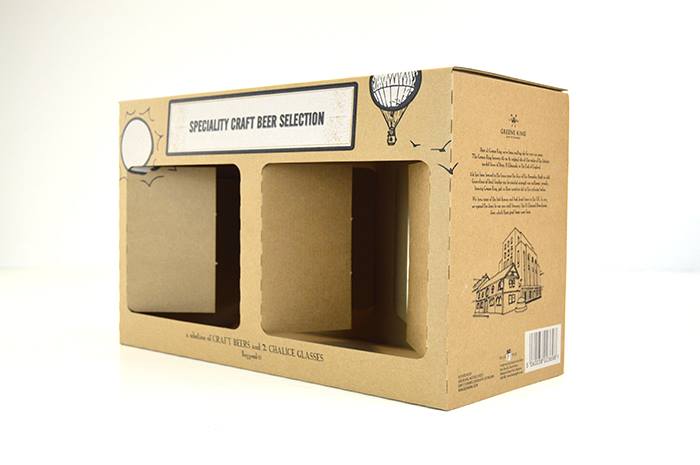
Hamper packaging has to protect a varied mix of products, support safe, efficient packing and arrive looking amazing. If it fails at any one of those jobs, it’s likely to create damage, rework or returns and, ultimately, a lost customer.
That makes specification important. You’re choosing more than a container. You’re deciding how the hamper will portray your business and move through your packing line, a UK courier network and, where relevant, retail or wholesale logistics and distribution.
Manor Packaging designs and manufactures bespoke hamper packaging for medium-to-large operations, including premium gifting businesses, national retailers and brand owners, e-commerce operations, and fulfilment and 3PL centres. We start with the product and its journey because you can’t choose the right board grade or construction until you understand the conditions it’ll face.
Start With the Hamper’s Journey
A gift hamper sent individually through a courier network faces different handling from one delivered in controlled quantities to retail distribution centres. The product weight might be identical, but the packaging requirements won’t be.
Treat the transit profile like a set of production instructions. If the instructions don’t reflect what happens on the line, the finished result can’t be reliable.
Build a Practical Transit Profile
Before you choose a material, record:
- The combined weight of every product and internal fitment
- The heaviest and most fragile items
- Whether bottles, jars or other rigid products could collide
- How the hampers will be stacked, stored and transported
- Whether each hamper will travel through a parcel courier network
- The expected packing speed and order volume during peak periods
- The presentation and opening experience required at final customer receipt
A 50,000-unit festive campaign also needs a different operational plan from a steady year-round programme. If your peak volume compresses several months of orders into a few weeks, packaging that’s slow to assemble can become a packing-line bottleneck.
Our design process considers the product, route and packing operation together. That gives you a specification based on real handling conditions rather than a box selected from dimensions alone.
Choose Corrugated Board for the Transit Risk
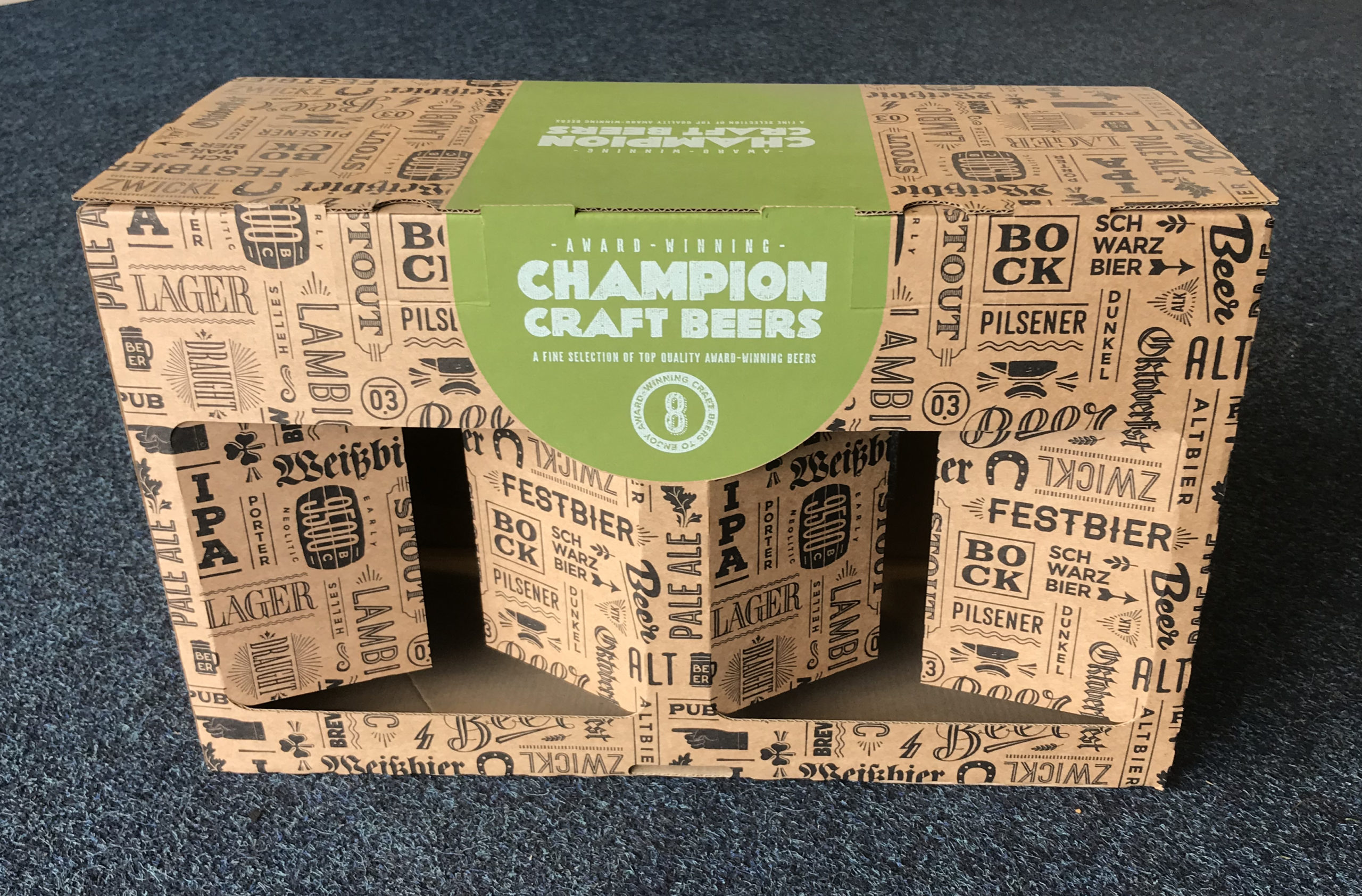
Corrugated board gets much of its strength from the fluted paper between its liners. The peaks and troughs work like cross-members in warehouse racking, adding rigidity without filling the entire structure with material.
Wall terminology describes the board material, not the style of the finished hamper. E-Flute, B-Flute and C-Flute single wall board contain one fluting. EB-Flute and BC-Flute double wall board contain two flutings. Depending on the individual circumstances, each grade can play a role in creating safe, secure and impressive gift hampers.
Why a Cheaper Grade Can Cost More
Downgrading materials from BC-Flute double wall board to C-Flute single wall board may reduce the unit price. On a demanding UK courier route, however, that saving alone can disappear through damaged products, replacement orders, additional handling and returns.
The box price is one line on the invoice. Packing labour, damage write-offs and customer replacements are other lines, so we assess the total potential packaging cost.
Single wall isn’t automatically the wrong answer. If you’ve got lighter products, a controlled route and well-designed internal support, it may be entirely suitable. The correct grade can’t be settled from flute names alone because product layout and handling conditions still change the recommendation.
Engineer the Internal Fit Around the Products
Mixed-product hampers rarely fail because the outer dimensions are a few millimetres out. They fail when a heavy jar, bottle or tin can move and transfer force into a lighter item.
A bespoke fitment works like a production jig. It locates each component in a repeatable position so your team isn’t rebuilding the arrangement at every packing station.
Control Movement With Bespoke Fitments
Our packaging technologists use an AG CAD Sample Table to develop and prototype bespoke internal fitments before production. This allows your team to check product fit, clearances and packing sequence while changes are still straightforward.
Depending on the contents, a bespoke custom packaging solution may use dividers, cradles or other Die Cut Packaging solutions to separate products and support vulnerable areas. A closer fit can also reduce reliance on loose plastic-based void fill, although you’ll still need enough clearance to pack efficiently.
If the hamper may be used for returns, that requirement should be designed in from the start. A construction that’s easy to open but can’t be closed securely again won’t support the return journey.
Include Packing Time in the Specification
Seasonal hamper operations can’t afford an awkward assembly process. If every unit takes several extra seconds to erect, load or close, those seconds become extra labour across 50,000 units.
A suitable Crash Lock Glued Box with a crash-lock glued base may support faster manual erection because the base locks into position as the case is opened. It won’t suit every premium presentation, but it’s worth considering when throughput matters.
The design should also arrive flat in a format that works with your packing area, equipment and replenishment process. Our e-commerce packaging is developed around product protection and operational handling, rather than treating the packing line as an afterthought.
Protect Presentation as Well as the Product
Hamper packaging shouldn’t leave the factory looking premium and arrive with crushed corners, rubbed print or inconsistent colour. For gift, retail and promotional work, presentation is one of the pack’s operational jobs.
Colour control is much like calibrating a production machine. If everyone works from a different setting, small variations soon become obvious across a full batch.
Specify Print and Manufacturing Consistency
Ask how your supplier controls manufacturing tolerances and repeatability between production runs. You’ll want consistent dimensions for predictable assembly, along with a defined process for managing corporate branding guidelines.
Manor Packaging uses 4 colour flexographic printing for branded corrugated packaging. The artwork, board surface and structural design need to be considered together because a print treatment that works on one flute profile may reproduce differently on another.
If the hamper is moving into stores, the outer packaging may also need to coordinate with shelf retail ready packaging. It has to protect the products while reaching the point of sale with the intended print finish and retail-facing consistency.
That’s how packaging delivers the wow factor without slowing the operation behind it.
Check Compliance Before Approving the Material
Compliance doesn’t sit separately from packaging design. It’s more like a bill of materials on a manufacturing job. If the inputs aren’t recorded correctly, reporting becomes harder later.
Under the UK’s Extended Producer Responsibility reporting rules (gov.uk), affected organisations may need packaging data covering material type and weight. Your supplier should be able to identify the corrugated components in the agreed specification and provide useful information for your records.
Consider Food Contact Boundaries
Many hampers contain food or drink, but the corrugated outer packaging won’t necessarily touch the product directly. Wrapped goods, sealed bottles and closed jars create a different contact situation from an unpackaged food item.
You should tell the supplier exactly how each product will be contained rather than assuming every hamper has the same requirement. The UK Government’s food contact materials guidance (gov.uk) provides the regulatory context, but it can’t decide the right construction for your particular product arrangement.
That decision still depends on the product, contact conditions and intended use.
Choose a Supplier That Can Meet Your Deadlines
A good prototype won’t help if the supplier can’t reproduce it consistently or deliver against your company deadlines during the busiest trading period. Supplier assessment should cover design, manufacturing control, responsiveness and the packaging supply chain.
Spare capacity is like leaving room in a shift plan for an urgent production order. If every machine hour is already committed, demand spikes quickly become someone else’s delay.
Review Capacity and Manufacturing Control
Ask potential suppliers:
- How do you measure On-Time, In-Full delivery performance?
- What capacity planning supports seasonal increases?
- Can you produce and assess a sample using your actual products?
- How are box consistency and manufacturing tolerances monitored?
- Can the supplier support repeat orders across multiple UK sites?
- Who manages changes to artwork, board grade or internal fitments?
- Will the supplier review packing speed as part of the quotation?
Our history of 96-98.5% On-Time, In-Full (OTIF) delivery performance is supported by an ongoing target of 30% capacity headroom buffer throughout the calendar year, which is what absorbs a seasonal hamper spike without pushing out your delivery dates.
Manor Packaging manufactures from its Peterborough base and supports UK-wide delivery, including operations across Cambridgeshire, Lincolnshire, Northamptonshire, the East Midlands and East Anglia. Our consultative approach connects the packaging specification to the way your team packs, stores and dispatches each hamper.
We’re large enough to cope, small enough to care.
Give the Supplier Enough Information to Quote Properly
A useful packaging quotation should resemble an engineering job sheet rather than a request for a price against three dimensions. If the supplier doesn’t know the products, route or packing method, they can’t expose the risks or price the design accurately.
Provide:
- Product dimensions and individual weights
- The proposed arrangement inside the hamper
- Annual volume, peak-week demand and required delivery deadlines
- Packing method and target packing speed
- Delivery destinations and courier method
- Print files and corporate branding guidelines
- Retail display or point-of-sale requirements
- Return-use requirements
- Current damage, rework or assembly problems
- Any packaging data your compliance team needs
Don’t compare quotations on unit price alone. Compare board grade, internal fit, packing time, print control, delivery reliability and the likely effect on returns. That’s the difference between buying off the shelf stock boxes and commissioning packaging that works across the whole operation.
A packaging consultation can turn those inputs into a sample and agreed specification before you commit to production. Begin your journey towards smarter packaging solutions, creating tailored packaging that delivers your brand safely and responsibly.
Get In Touch

Manor Packaging Ltd
200 Station Road
Whittlesey
Peterborough
PE7 2HA